




NEWS
- News Type
- Industry dynamics
- Company News
- Technical knowledge
The Liaohe Oilfield has put a new device into use, reducing the comprehensive cost per ton of liquid by more than 20%.
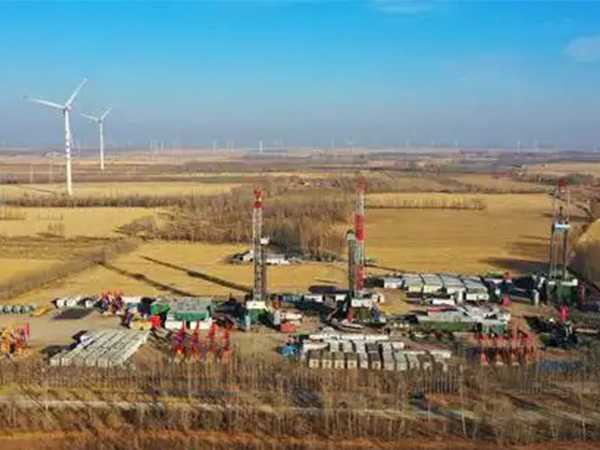
On October 28th, it was learned from Liaohe Oilfield that after the Shu 5 Combined Station of the oilfield adopted the new-generation low-temperature electric dehydration device, the water content of crude oil leaving the station was stably controlled within 0.3%, and the comprehensive cost per ton of liquid decreased by more than 20%.
Dehydrating heavy oil has always been a difficult problem restricting the low-cost development of oilfields. The key and difficulty in achieving low-temperature dehydration lies in demulsification. The technical team of Liaohe Oilfield Design Institute deeply analyzed the physical and chemical properties of heavy oil emulsions, developed a multi-field coupling electric dehydration simulation experimental device, and systematically revealed the influence mechanism of flow field and pressure field on the dehydration effect. "Heavy oil emulsions are diverse in type and complex in composition. The previous single energy field treatment method often fails to achieve the desired effect," said Li Zeqin, a first-level engineer of Liaohe Oilfield Design Institute.
Based on the simulation experiments and data, the technical team designed a "multi-field coupling technology" route, adopting an organic combination of "direct current electric field + high-voltage high-frequency electric field + low-voltage high-frequency electric field". According to the variation law of crude oil water content and different forms of emulsions, different forms of electric fields were arranged in a stepwise manner from bottom to top, and organically coupled with the thermal chemical sedimentation field to achieve efficient closed treatment of heavy crude oil at 90 degrees Celsius or below. At the same time, it effectively solved the industry problems such as "backmixing" inside the electric dehydrator and the difficulty in measuring the oil-water interface, creating a new-generation low-temperature electric dehydration device with stable performance. Compared with the traditional process, the new-generation low-temperature electric dehydration device reduces energy consumption by 65%, and the water content of the crude oil leaving the station is stably controlled below 0.3%, with all indicators exceeding industry standards.